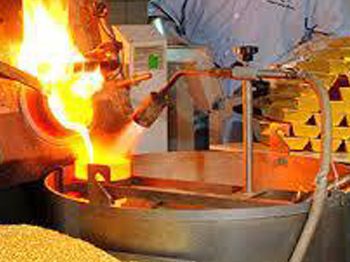
- Dissolved in the aqua regia using your selected dissolving agent.
- Once all of the metal is dissolved, add urea (a harmless chemical: CO(NH2)2) to remove any free nitrogen in the solution. With nitric-acid-based aqua regia, a large amount of urea is generally required. With MX3-based aqua regia, usually, only a pinch is required. The purpose of the area is to prevent gold from re-dissolving after it has been precipitated. If urea is not added and some free nitrogen remains dissolved in the solution, some gold may be re-dissolved.
- Add your selective precipitant to your solution. The gold will be selectively precipitated out of the solution. There are a variety of precipitants that can be used: Quadratic, sodium metabisulfite, sulphur dioxide gas, Storm Precipitant and ferrous sulphate are among the most common. Most of these precipitants produce very unpleasant fumes or odours and have other negative side effects. Some people prefer Quadratic Precipitant, since it’s odourless, fumeless, produces large particles that are easily rinsed, and has an unlimited shelf life. Regardless of the precipitant used, however, the resulting gold is typically from 99.95% to 99.99% pure.
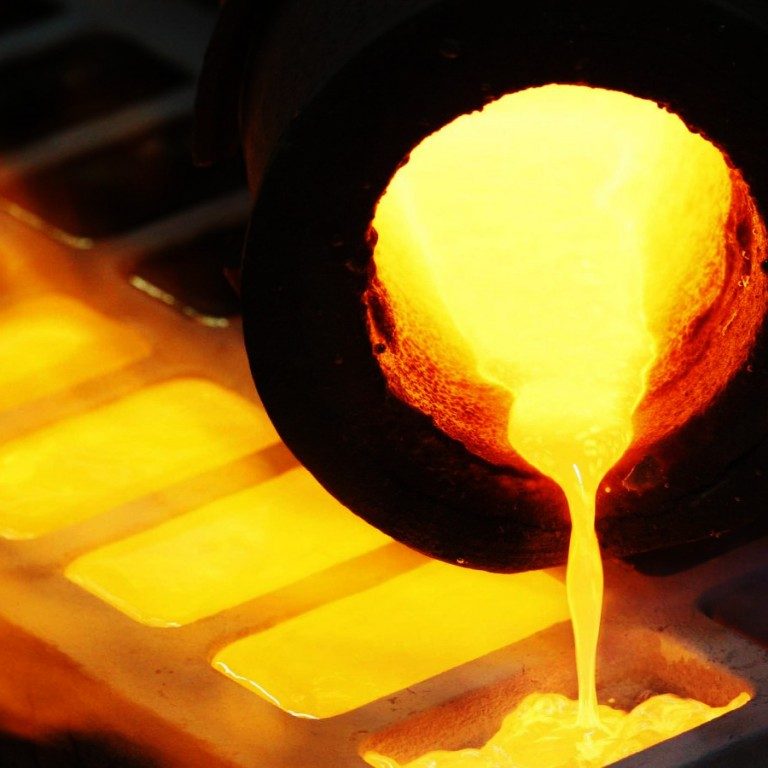
The key to removing impurities is to get them to separate from the gold. Aqua regia is the name given to a mixture of nitric acid and hydrochloric acid. This combination is intensely powerful—more than the individual acids. In this process, the gold itself is dissolved and then precipitated after siphoning out the gold impurities. This method is typically used by Shruti refinery doing small to medium batches requiring 99.99% purity. This practice is commonly used because it is not time-consuming. It is effective at removing nearly all gold impurities with the upshot that if platinum is present, it doesn’t dissolve and can be separately refined.
Business Plan Consultant?
Select Language
 Afrikaans
 Albanian
 Amharic
 Arabic
 Armenian
 Azerbaijani
 Basque
 Belarusian
 Bengali
 Bosnian
 Bulgarian
Catalan
Bulgarian
Catalan
 Cebuano
 Chichewa
 Chinese
(Simplified)
Chinese
(Simplified) Chinese
(Traditional)
Chinese
(Traditional) Corsican
 Croatian
 Czech
Czech Danish
 Dutch
Dutch English
 Esperanto
 Estonian
Filipino
Estonian
Filipino
 Finnish
French
Frisian
Galician
Finnish
French
Frisian
Galician
 Georgian
 German
 Greek
Greek Gujarati
 Haitian
Creole
Haitian
Creole Hausa
Hausa Hawaiian
 Hebrew
Hindi
Hebrew
Hindi Hmong
Hmong
 Hungarian
 Icelandic
Igbo
Icelandic
Igbo Indonesian
 Irish
Irish Italian
 Japanese
Javanese
Kannada
Japanese
Javanese
Kannada
 Kazakh
 Khmer
Khmer Korean
 Kurdish
 Kyrgyz
Lao
Kyrgyz
Lao Latin
Latin Latvian
 Lithuanian
 Luxembourgish
 Macedonian
 Malagasy
 Malay Malayalam
 Maltese
 Maori Marathi
 Mongolian
 Myanmar
 Nepali
 Norwegian
 Pashto
 Persian
 Polish
 Portuguese
Punjabi
Portuguese
Punjabi
 Romanian
 Russian
 Samoan
Scottish
Gaelic
Samoan
Scottish
Gaelic Serbian
 Sesotho
 Shona
Shona Sindhi
 Sinhala
 Slovak
 Slovenian
 Somali
Spanish
Sundanese
Somali
Spanish
Sundanese
 Swahili
 Swedish