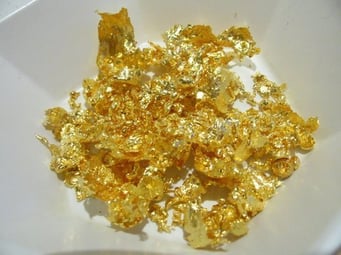
There are two methods: working with saltwater and working with acid. Both work equally as well, but for a variety of reasons, including safety, cost, and the kind of material that you are refining, you may choose to use one method over the other.
There are two methods: Chemical and Electrolytic processes. If you’re refining purely chemically, you will have to use dilute nitric acid. Sorry, no way around that. However, if you choose to refine using the electrolytic way, then the nitric acid will be diluted, resulting in relatively few fumes.
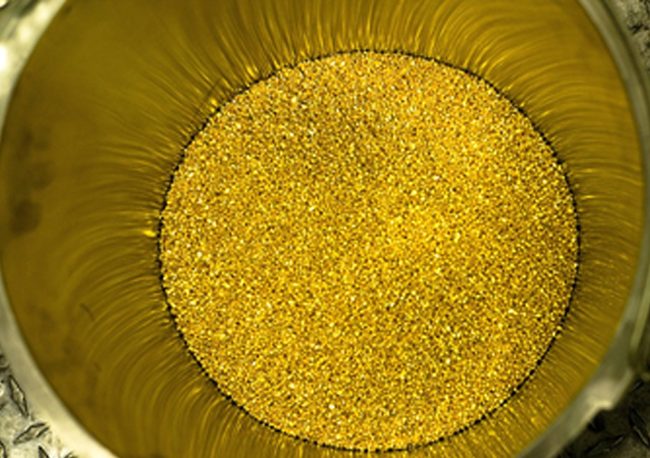
Refining Gold (Saltwater)
The process for the Simplicity method is simple: Hang your metal on a wire that is connected to a car battery charger and then immerse the metal in saltwater in the Simplicity (or similar) unit. Turn on your battery charger. An electric current will run through the metal causing it to dissolve at a rate of about 1 ounce per hour. Once all of the metal is dissolved, add a selective precipitant, such as Quadratic, to the solution. Only pure gold will turn back into solid metal. For all of the other metals, the impurities will remain dissolved. The resulting gold is at least 99.95% pure gold.
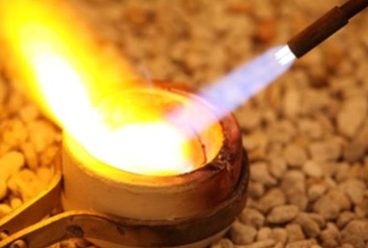
Refining Platinum (Saltwater)
The platinum group metals (or PGMs) include platinum, palladium, rhodium, iridium, osmium, and ruthenium. Platinum, palladium, and rhodium are commonly used in industry and jewelry.
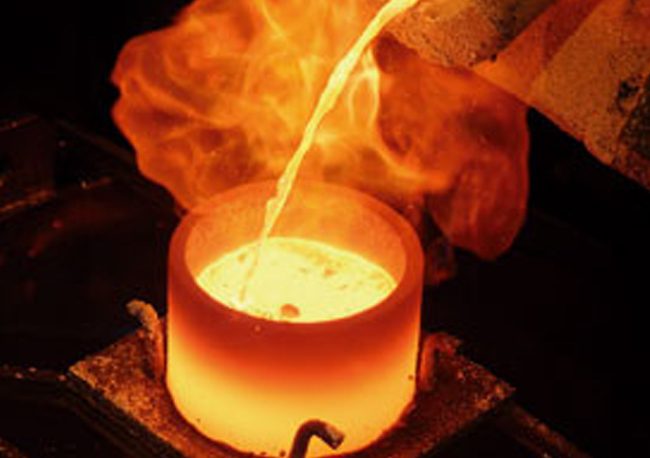
The process:
- Melt your metal with a base metal, such as tin or ASR Alloy and pour into an ingot mold.
- Hang it on a wire in the Simplicity Refining System and connect it to a battery charger.
- Turn on your battery charger. The base metal will start to dissolve.
- Once the ingot finishes disintegrating rinse the platinum group chloride.
- Dissolve them in ammonia and add a selective precipitant.
By simply recovering the precipitated metal between each precipitation, you can achieve a purity of at least 99.95+ purity for each platinum group metal.
Saltwater-based Refining
We perfected this process back in the late 80s for other refiners to refine both gold and platinum group metals safely, while also reducing costs. After working with people who have refined using this method, we’ve carefully perfected this method through the Simplicity Refining System to make it simple for individuals and companies. We’re overjoyed that thousands of happy refiners have saved millions of dollars using this perfected process.Business Plan Consultant?
 Afrikaans
 Albanian
 Amharic
 Arabic
 Armenian
 Azerbaijani
 Basque
 Belarusian
 Bengali
 Bosnian
 Bulgarian
 Cebuano
 Chichewa
 Chinese
(Simplified)
Chinese
(Simplified) Chinese
(Traditional)
Chinese
(Traditional) Corsican
 Croatian
 Czech
Czech Danish
 Dutch
Dutch English
 Esperanto
 Estonian
 Finnish
 Georgian
 German
 Greek
Greek Gujarati
 Haitian
Creole
Haitian
Creole Hausa
Hausa Hawaiian
 Hebrew
 Hmong
Hmong
 Hungarian
 Icelandic
 Indonesian
 Irish
Irish Italian
 Japanese
 Kazakh
 Khmer
Khmer Korean
 Kurdish
 Kyrgyz
 Latin
Latin Latvian
 Lithuanian
 Luxembourgish
 Macedonian
 Malagasy
 Malay
Malay Maltese
 Maori
Maori Mongolian
 Myanmar
 Nepali
 Norwegian
 Pashto
 Persian
 Polish
 Portuguese
 Romanian
 Russian
 Samoan
 Serbian
 Sesotho
 Shona
Shona Sindhi
 Sinhala
 Slovak
 Slovenian
 Somali
 Swahili
 Swedish